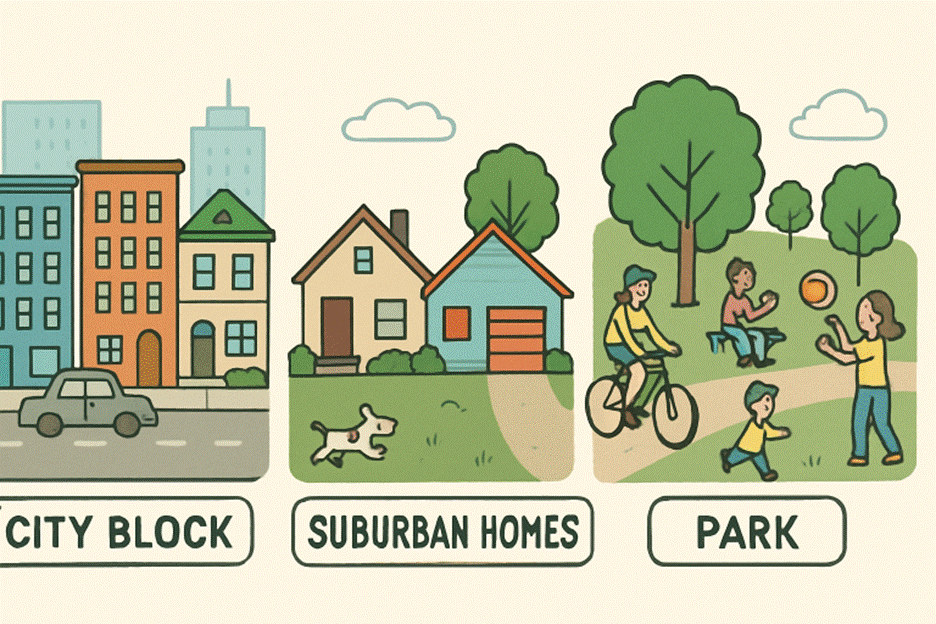
Finding the ideal neighborhood is one of the most important parts of the home-buying process. The environment you choose will shape your daily routines, peace of mind, and overall quality of life. For those considering a move in central Florida, Ocala, FL homes for sale offer a diverse range of neighborhood options, making it essential to weigh your priorities before making a decision. Understanding what matters most to you—whether proximity to work, access to green space, or community atmosphere—can help ensure your next home is more than just a place to live.
Whether you’re seeking the vibrancy of a city center, the quiet of suburbia, or something in between, knowing the key considerations will empower you to make a choice that fits your lifestyle. From evaluating safety to exploring local amenities, this guide will walk you through the process of discovering your ideal neighborhood.
Beyond just the home itself, the right neighborhood can provide a sense of belonging and convenience that enriches your life in countless ways. Plan to invest time researching your options so that the final decision aligns seamlessly with your future goals and daily needs.
Assess Your Lifestyle Needs
Start your search by making a list of what matters most to you and your family. Some buyers prioritize walkability and entertainment, while others look for peace, quiet, and access to nature. Do you want to be near vibrant local restaurants or would you rather live close to scenic trails? Consider who will be living in your new home, your stage of life, and how you envision spending your time both indoors and out. This clarity will make it easier to filter neighborhoods as you begin your search.
See also: How Local Search Engine Strategies Are Changing for Modern Businesses
Evaluate Safety and Crime Rates
If safety is a top concern, start by investigating local statistics through police department websites or platforms. Look for not just overall crime rates, but the types of incidents that are most common. Some neighborhoods may have higher reports of property crime while remaining largely free of violent offenses. Speaking with nearby residents or checking local news can also provide a more nuanced picture.
Research Local Schools
Even buyers without children often consider school quality, as well-performing districts can be associated with higher property values and greater neighborhood stability. Resources like GreatSchools.org allow easy comparison of test scores, parent feedback, extracurricular offerings, and teacher-to-student ratios. If possible, visit local schools, speak with educators, and attend community events to gain first-hand perspectives on educational options.
Consider Commute and Transportation
The convenience of your daily commute and access to public transportation play a major role in overall satisfaction. Use mapping tools to estimate travel times during rush hours, as traffic congestion can turn a seemingly short trip into a daily frustration. If you plan to use buses or trains, review the routes and schedules to ensure they meet your needs. Ample parking or bicycle-friendly streets are also factors worth weighing.
Explore Local Amenities
Take note of the area’s amenities, including parks, playgrounds, shopping centers, fitness studios, hospitals, and entertainment venues, as they can significantly boost your quality of life. Visit prospective neighborhoods at different times to see which amenities are active and accessible. Having recreational facilities nearby fosters a healthy social network and makes daily errands much more convenient.
Analyze Property Values and Market Trends
Understanding the local real estate market can help you make informed investment decisions. Check local listings and historical sales data to judge whether property values are rising, steady, or declining. Neighborhoods with steady appreciation, modernized infrastructure, or planned public investments are typically a sound choice.
Visit at Different Times
The feel of a neighborhood can shift dramatically based on the day or time. Drop by during morning rush hour, mid-afternoon, and late at night to observe noise, activity, and safety. Notice how many people are out and about, the condition of public spaces, and how well-lit the streets are after dark. This broader view will help you spot potential red flags or hidden perks.
Engage with the Community
Meeting current residents can reveal facets of a neighborhood you won’t find in online reviews. Attend local events, visit farmers’ markets, or strike up conversations with people in parks and shops. Ask about their experiences, the community’s strengths, and any challenges. Their insight is invaluable for gauging the area’s sense of community and overall atmosphere.
Putting in the time to understand each of these elements will help you find not just a house, but a genuine home. Thorough research ensures you’re confident and happy with your new neighborhood for years to come.
Final Thoughts
Choosing the right neighborhood is a decision that extends far beyond square footage and curb appeal—it’s about finding a place that supports your lifestyle, values, and long-term goals. By carefully assessing factors like safety, schools, amenities, commute, and community feel, you set yourself up for a more satisfying and confident home-buying experience. Taking the time to visit, research, and connect with residents can uncover insights that listings alone can’t provide. Ultimately, a well-chosen neighborhood enhances not only your investment, but also your day-to-day happiness, helping your new house truly feel like home.