Sharp knives are an essential part of any safe and efficient kitchen. When kitchen blades become dull, home cooks face greater risks of slipping and sustaining injuries. Understanding which sharpening methods you can safely use at home is crucial for both amateur and experienced cooks. Maintaining sharp knives does not require mailing your blades away or resorting to hazardous DIY hacks. In fact, experts often highlight why mobile knife sharpening is safer than shipping your knives off for service, but many safe options are available for those who wish to handle their own knife maintenance.
The following methods are user-friendly and minimize risk, keeping your knives in top working order. Each approach has its own strengths, so home cooks can confidently choose the one that best fits their needs, kitchen space, and level of expertise. Not only does having sharp knives make food prep faster and more enjoyable, but it also lessens the risk of accidents caused by a blade that catches or slips instead of slicing smoothly.
Whetstones: Traditional and Effective
Whetstones have been a trusted sharpening method for generations. Their surface comes in a variety of grits, from coarse (lower numbers) for significant reshaping to fine (higher numbers) for polishing and finishing. Using a whetstone takes practice, but it is valued for the level of control it offers. With the proper technique, home cooks can sharpen blades without removing too much metal or damaging the knife’s edge.
Manual Pull-Through Sharpeners: User-Friendly Options
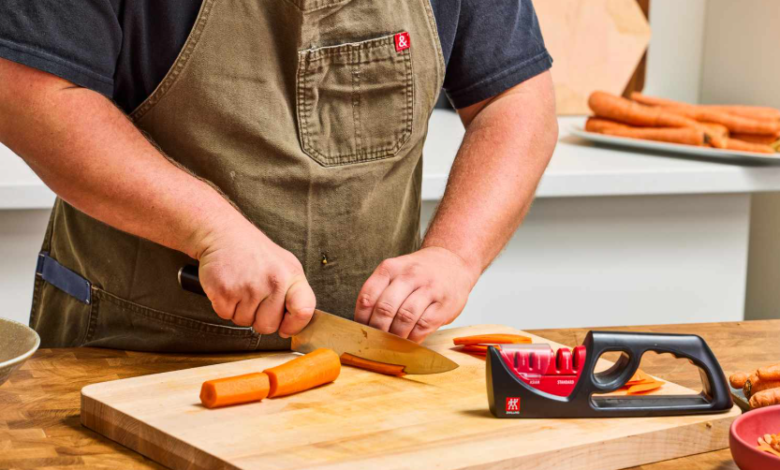
Manual pull-through sharpeners are straightforward and perfect for quick touch-ups. These compact devices guide the knife at a fixed angle, minimizing user error and preventing uneven edges. Many models include slots for coarse and fine sharpening, so users can tailor their approach to how dull the blade is.
Electric Knife Sharpeners: Quick and Convenient
Electric sharpeners deliver speed and consistency, making them a favorite for busy home cooks. They use motorized abrasive wheels to sharpen blades quickly, which is particularly useful if you process a lot of vegetables or meat. The key is selecting a model that runs at a low speed to avoid overheating or excessive removal of the metal. For example, the Tormek T1 operates at a gentle 100 to 120 RPM, using diamond wheels to refine the edge safely without wearing down the knife.
Honing Rods: Maintaining the Edge
Unlike sharpeners, honing rods do not remove metal from the knife. Instead, they realign the blade’s edge, keeping it sharp in between regular sharpening sessions. Using a honing rod, whether steel or ceramic, can extend a knife’s lifespan and delay the need for more aggressive sharpening. A few firm, careful strokes keep the edge in optimal condition, particularly for frequently used kitchen knives.
See also: Practical Tips for Maintaining Dental Implants for Optimal Longevity
DIY Methods: Creative Solutions
Resourceful home cooks sometimes turn everyday household items into makeshift sharpeners. One common trick is using the unglazed, rough bottom of a ceramic coffee mug to gently hone a blade. By stroking the knife’s edge along this surface at a consistent angle, a slight improvement in sharpness can be achieved. While such techniques are not replacements for quality sharpening tools, they can be helpful in an emergency or when traveling. Always be cautious not to apply excessive force or use irregular surfaces, as this could nick or warp your knife.
Safety Tips for Home Knife Sharpening
- Always read the instructions that come with any sharpening tool before use.
- Consider wearing cut-resistant gloves for additional protection.
- Place the sharpening tool on a level, non-slip surface to prevent accidents.
- Sharpen knives by moving the blade away from your body.
- Check the knife for chips or cracks before sharpening, as damaged blades may be unsafe to sharpen or use.
Final Thoughts
Sharp knives are safer for slicing and dicing food prep. Home cooks can confidently maintain their kitchen blades using tools and methods designed for safe, easy sharpening. Whether you favor the precision of a whetstone, the convenience of an electric sharpener, or the gentle upkeep of a honing rod, keeping blades sharp pays dividends in safety, speed, and satisfaction. Select the method that suits your experience and kitchen habits, and always adhere to recommended safety practices for best results.