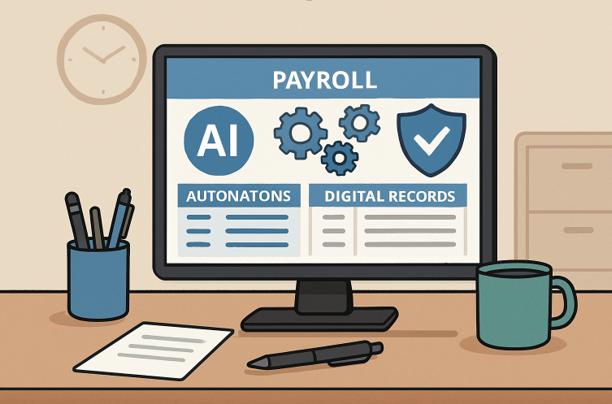
Businesses today operate in a fast-paced, technologically advanced environment where efficiency and accuracy are not just desirable, but necessary to remain competitive. As organizations strive to optimize every aspect of their operations, automated payroll systems are becoming an essential component for both small businesses and large enterprises. These systems streamline payroll management, offer high reliability, and provide a clear link to the future of work. For organizations in need of specialized solutions, payroll services in Canada offer tailored options to meet evolving workforce needs.
Automated payroll advancements do not merely enhance productivity. They also shape organizational structures and reskill workforces, aligning businesses with the digital economy. Automation in payroll now means that processes that once required significant manual effort can be handled quickly and precisely. This has real implications for HR professionals and finance teams, redefining their scope of work and career trajectories.
Across various industries, companies that adopt automated payroll technologies are distinguishing themselves by reducing costly errors and maximizing regulatory compliance. These changes do not come without challenges, but the benefits for those who implement robust systems are clear. As businesses weigh their options, the strategic adoption of integrated payroll solutions will play a significant role in their future positioning.
Evolution of Payroll Systems
Payroll management has undergone a significant digital transformation over the last several decades. What began as a labor-intensive process reliant on manual calculations, paper records, and physical check distribution has been revolutionized by technology. Early payroll software automated calculations, brought about digital record-keeping, and improved data storage. Today, cloud-based systems, APIs, and all-in-one HR platforms offer real-time payroll processing, multilingual support, and global reach. These advances mirror the larger business movement toward digitization and integrated, data-driven operations. These modern payroll solutions not only streamline administrative tasks but also enhance compliance, reduce errors, and provide actionable insights for better workforce management.
Benefits of Automated Payroll
Companies of all sizes experience substantial improvements when automating payroll:
- Accuracy: Automated calculations minimize the risk of costly human errors, particularly in industries with complex compensation structures.
- Efficiency: Processes that once took hours or days can now be completed in moments, freeing up valuable employee time for higher-value work.
- Compliance: Systems are kept up to date with regional tax laws and labor regulations, helping employers remain compliant and avoid penalties.
- Cost Savings: Reductions in administrative hours and mitigation of payroll errors lead directly to substantial cost reductions over time.
AI Integration in Payroll
Artificial Intelligence is rapidly reshaping payroll processing by transforming how payroll data is collected, analyzed, and validated. With embedded AI, systems can analyze historical records, automatically identify anomalies, and flag suspicious activities or discrepancies before they turn into problems. One prime example is the adoption of intelligent suites, such as those announced by Mercans, which feature real-time data verification and continuous compliance monitoring.
These AI-powered enhancements are paving the way for payroll to become a continuously operating function, integrating with other business processes and providing immediate insights for HR and finance leaders.
Impact on Employee Roles
The transition from manual to automated systems is having a profound impact on job descriptions and expectations within organizations. Routine data entry and repetitive calculations are increasingly automated, which shifts employee focus toward strategic thinking, data analysis, and process improvement. For businesses, this means a greater need to invest in staff upskilling and digital literacy programs. The HR and payroll teams of tomorrow will need to manage systems integration, oversee software functionality, and draw insights from payroll analytics rather than solely handling transactional work.
See also: How Knife Techniques Can Transform Your Survival Abilities
Compliance and Security
Automated payroll solutions are critical tools for maintaining compliance with labor laws, tax codes, and data privacy standards. These systems monitor and apply regulatory updates, ensuring that deductions and remittances meet the legal requirements of each jurisdiction. They also provide advanced data protection techniques, like encryption and permission-based access, reducing the risk of data breaches and unauthorized access to sensitive employee information. Enhanced compliance and security support employee trust and shield businesses from legal and reputational risks.
Challenges and Considerations
Organizations often encounter hurdles during the implementation of automated payroll systems. Initial setup costs, including software licensing, hardware upgrades, and employee training, may require substantial investments. Integration with legacy accounting or HR systems can be complex, leading to temporary productivity lags or data migration issues. Ongoing maintenance, technical support, and regular updates are crucial for system reliability. Companies must carefully assess solutions to ensure long-term scalability and functionality that align with their business strategy.
Future Trends
Looking ahead, automated payroll systems will play an even larger role in HR technology ecosystems. Future systems are expected to offer seamless integration with broader HR, finance, and workforce management platforms. Predictive analytics powered by AI and machine learning will help companies anticipate workforce needs, forecast labor costs, and personalize compensation and benefits packages. Employee self-service portals will gain advanced features, giving staff greater transparency and control over their payroll, benefits, and tax information. To remain competitive, businesses must actively monitor these innovations and remain open to continuous digital transformation.
Final Thoughts
The rapid adoption of automated payroll systems is reshaping how businesses operate and how employees interact with financial management functions. These systems drive efficiency, accuracy, and compliance while enabling professionals to shift their focus to more strategic, valuable contributions within their organizations. As payroll technology continues to evolve, successful adoption and integration will be key to maintaining a competitive edge and supporting long-term workforce satisfaction.