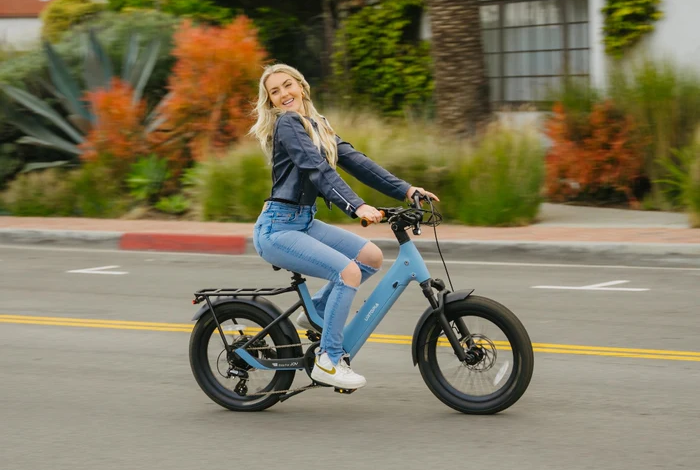
For years, the American garage was a place of specialization. You had the gas-guzzling SUV for the daily haul and perhaps a dusty mountain bike or a road cycle hanging from a hook for the occasional Sunday ride. But the landscape of American transit is shifting. As urban congestion hits an all-time high and fitness goals become harder to squeeze into a 40-hour workweek, a single solution has emerged to bridge the gap. If you’ve been watching the latest ebike sale trends, you’ve likely realized that these machines aren’t just gadgets—they are legitimate dual-purpose vehicles.
The question is no longer if you should get one, but rather how one frame can handle two completely different lives. Can a bike that gets you to a corporate meeting without a drop of sweat also be the tool that leaves your legs burning on a Saturday morning? The answer is a resounding yes.
The Modern American Hybrid Lifestyle
We are witnessing a cultural shift in how we view “effort.” In the U.S., there was once a lingering stigma that assisted riding was somehow “cheating.” However, that narrative is dissolving as more people realize that an e bike actually increases the frequency and duration of their rides.
Instead of choosing between a grueling workout or a boring drive, Americans are adopting an investment mindset. By swapping a second car or a pricey gym membership for a high-quality electric bike, they are gaining hours of productivity and outdoor time. It’s about versatility: having a vehicle that adapts to your energy levels rather than one that dictates them.
Redefining the Morning Commute
The weekday struggle usually involves two enemies: time and sweat. Traditional cycling to work often requires a logistical dance of packing a change of clothes and hunting for an office shower. With an electric motor, that barrier disappears. By utilizing higher levels of pedal assist, you can cruise at 20 or 28 mph—beating city traffic and arriving at your desk feeling energized rather than exhausted.
Beyond the “no-shower” advantage, the financial logic is hard to ignore. When you factor in the soaring costs of gas, registration, and “hidden” expenses like downtown parking fees, the bike pays for itself within the first year. You aren’t just saving money; you’re reclaiming your sanity by bypassing the gridlock that defines the American 9-to-5.
Turning the Assist Down for the Weekend Burn
When Saturday rolls around, the persona of the bike shifts entirely. The same motor that carried you to work can be dialed down—or turned off—to transform the commute into a high-intensity training session. This is where “Active Recovery” and “Zone 2 Training” come into play. By keeping the assist at a minimum, you can maintain a steady, elevated heart rate for hours, building cardiovascular endurance without the “wall” that often stops casual riders on steep hills.
Moreover, the electric advantage acts as a “great equalizer.” It allows families or groups of friends with varying fitness levels to ride together. The seasoned athlete can ride unassisted, while a partner can use the motor to keep pace. It turns a 15-mile “limit” into a 50-mile exploration, opening up state parks and trailheads that were previously out of reach for a weekend morning.
Picking a Bike That Plays Both Roles
To successfully bridge the gap between “commuter” and “athlete,” you need to understand the American three-tier system. Class 3 bikes, which offer assistance up to 28 mph, are the kings of the suburban commute, allowing you to flow with the speed of traffic. However, if your weekend plans involve local multi-use paths, a Class 1 or 2 might be more compliant with local trail regulations.
The “utility factor” is also key. A truly versatile setup includes removable pannier bags for your laptop and lunch during the week, which can be swapped for a hydration pack and a repair kit on the weekend. Modern eBikes also offer sophisticated “Tech Stacks”—integrated displays that sync with apps like Strava or Garmin. This allows you to track your “human power” output separately from the motor, giving you an accurate picture of your fitness progress.
Safety and Security in the Real World
Of course, owning a high-value piece of technology requires a strategy for the “real world.” In many U.S. cities, infrastructure is still catching up to the bike boom. Mastering the “bike-friendly” route—using side streets and dedicated lanes rather than main arteries—is essential for a stress-free experience.
Security is the other half of the equation. You wouldn’t leave a convertible with the keys in it, and you shouldn’t skimp on protection for your bike. Investing in a high-security U-lock (or two) and utilizing “Smart” security features like GPS tracking or motor-lock apps will give you peace of mind whether you’re at the office or stopping for a post-ride espresso at a trailhead café.
Conclusion
The beauty of the electric bike lies in its ability to be whatever you need it to be at that exact moment. On a rainy Tuesday, it is a high-speed transit tool that saves you from the stress of a steering wheel. On a sunny Sunday, it is a fitness machine that pushes your boundaries and expands your horizon.
Ultimately, you aren’t just buying a bike; you’re future-proofing your lifestyle. By embracing a machine that handles both the hustle and the health, you’re choosing a more efficient, more enjoyable way to move through the world. The most versatile tool in your garage isn’t the car anymore—it’s the one with the battery.