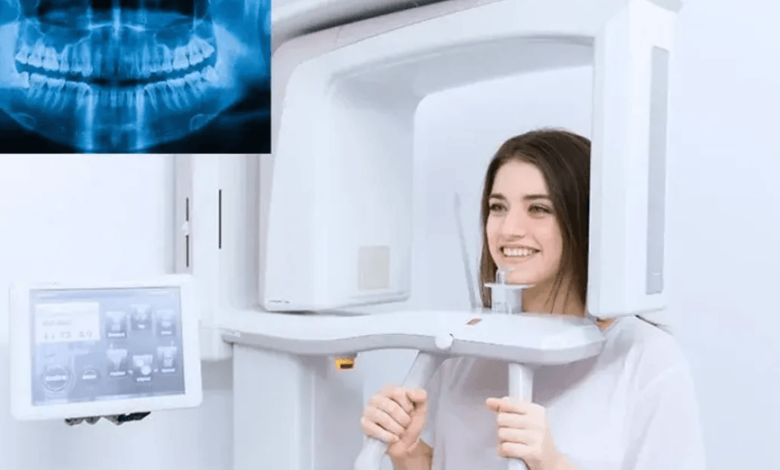
You go in for what you think is a routine dental visit, then your family dentist in Jackson, OH says a standard X ray may not show the full picture. That can feel unsettling fast. You may already be dealing with pain, swelling, a treatment plan you did not expect, or that nagging sense that something is off even though the usual images looked limited.
Sometimes a regular dental X ray is enough. Sometimes it is not. A more advanced scan, often a cone beam CT, gives your dentist a 3D view of teeth, bone, nerves, and nearby structures. That extra detail can matter when symptoms do not match what shows up on a basic image, when treatment needs precision, or when hidden problems may change the plan.
If you have been told you might need a deeper look, you are not overreacting. In many cases, an advanced dental imaging scan helps prevent guesswork, missed issues, and treatment that has to be redone later.
Persistent pain and unclear symptoms often call for advanced dental imaging
One of the clearest signs is pain that does not line up with a standard exam. You may have a toothache that comes and goes, pressure when you bite, or pain that seems to spread into your jaw or ear. A regular X ray can catch many common problems, but it may miss fractures, hidden infections, bone loss patterns, or the exact position of a problem tooth.
This is where a more advanced diagnostic dental scan can change the course of care. A 3D scan can reveal issues tucked behind roots, inside bone, or around structures that overlap on a 2D image. If you have ever heard, “I want to take a closer look before we decide,” that usually means your dentist is trying to avoid treating the wrong tooth or missing the real source of pain.
The RadiologyInfo overview of dental cone beam CT explains that this type of imaging is often used when detailed views of the teeth, jaw, and facial bones are needed. That matters when symptoms are real, but the first round of imaging leaves unanswered questions.
Impacted teeth, implant planning, and oral surgery need more detail
Another strong indicator is when your treatment involves anatomy that has to be mapped carefully. Impacted wisdom teeth are a common example. If a tooth is close to a nerve, angled into another tooth, or buried in bone, a basic image may not show enough depth to guide a safe removal.
The same goes for dental implants. Your dentist needs to know the height, width, and density of the bone, along with the exact location of nerves and sinuses. A 3D scan can help answer those questions before a procedure starts. Without that level of detail, planning becomes less precise, and precision is the whole point in surgery and implant placement.
You may also need a scan before root canal retreatment, evaluation of jaw pathology, or orthodontic planning when tooth position is not straightforward. In those cases, advanced dental scan technology is not about doing more for the sake of it. It is about seeing what standard imaging cannot show well enough.
Repeated dental problems can point to a hidden issue
If the same area keeps flaring up, there may be more going on beneath the surface. A tooth that has already had work done but still hurts, recurring gum swelling, unexplained infection, or a bite that suddenly feels off can all signal a problem that needs a better view.
Hairline root fractures are one example. They can be hard to detect on routine images, especially early on. Certain cysts, bone defects, and resorption problems can also stay hidden until they become larger or more painful. By then, treatment may be more involved.
The review in the NCBI Bookshelf chapter on cone beam computed tomography in dentistry describes how CBCT can support diagnosis in endodontics, oral surgery, and other dental settings where fine detail affects care decisions. If your problem keeps returning, your dentist may be looking for the reason it never fully resolved.
Radiation exposure and diagnostic value should be weighed together
It is reasonable to pause when you hear the word CT. Most people want to know whether the scan is really needed and what the radiation exposure looks like. That is the right instinct. A cone beam CT should be used when the expected benefit is clear, not as a routine add on.
The FDA guidance on dental cone beam computed tomography stresses that these scans should be justified for a specific clinical need and performed with the lowest radiation setting that still provides useful images. In plain terms, your dentist should have a reason for ordering it and should be able to explain how the result may change diagnosis or treatment.
| Situation | Standard Dental X Ray | Advanced Diagnostic Scan |
| Routine cavity check or simple exam | Often enough | Usually not needed |
| Persistent pain with unclear cause | May miss depth or overlap issues | Can show 3D detail of roots, bone, and nearby structures |
| Implant planning | Limited for bone width and nerve position | Helps map bone, nerves, and sinus space |
| Impacted wisdom teeth or oral surgery | Shows position, but depth can be limited | Clarifies angle, depth, and relation to nerves |
| Repeat infection or failed prior treatment | May not reveal hidden fracture or lesion | Can uncover underlying structural problems |
Clear steps help you decide whether a dental scan makes sense
Ask what the scan is expected to show. You do not need a long technical explanation. You need a direct answer. Ask what your dentist suspects, why a standard X ray is not enough, and whether the result could change the treatment plan. If the answer is specific, that is a good sign the scan has a real purpose.
Tell your dentist exactly what you are feeling. Small details matter. Pain when chewing, pressure near one root, numbness, swelling that comes and goes, or symptoms that worsen at night can all help guide the imaging decision. General dentist visits go better when your description is precise, even if the symptom seems minor.
Get clarity on timing and options. If the issue is urgent, delaying imaging can delay the right treatment. If it is not urgent, ask whether monitoring is reasonable or whether another type of dental scan would answer the same question with less exposure. A good plan should feel measured, not rushed.
See also: How Can You Restore Healthy Foot Function With CWG Foot Care?
The right scan can make treatment simpler and more accurate
Needing more imaging does not automatically mean something serious is wrong. It often means your dentist wants a cleaner map before moving forward. That can spare you from guesswork, extra appointments, and treatment that misses the real problem.
If you have one or more of these 4 indicators that you may need a more advanced diagnostic dental scan, bring them up at your next appointment and ask for a clear explanation of your imaging options. The right information can make the next step feel a lot less uncertain.