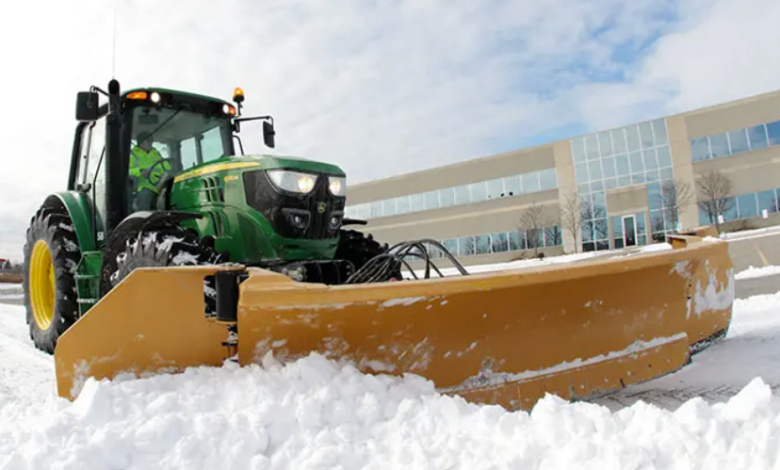
Professional Snow Removal Across Coquitlam
A snow contract that works perfectly for a flat retail lot can be poorly designed for a property built into a hill.
The difference is not simply that slopes are harder to plow. Grade changes how snow is approached before the storm, how equipment moves during clearing, how quickly traction can deteriorate, where snow can be stored, and what happens when temperatures rise afterward.
That makes hillside commercial snow removal a contract-planning issue as much as a field-service issue.
A useful agreement should recognize the property’s actual terrain rather than treating every square metre of pavement as equivalent. Steep driveways, sloped loading areas, elevated parking sections, ramps, and narrow hillside access roads can become operational bottlenecks long before the rest of a property becomes difficult to use.
The strongest contract therefore starts with a site question: where would loss of traction interrupt the entire property?
That answer should shape the service scope.
Slope, Traction, and Contract Scope
Snow depth is an easy service trigger because it is measurable. On a hill, however, accumulation depth is only one part of the risk.
A Small Accumulation Can Matter Earlier on a Grade
A relatively modest amount of wet snow may be manageable on flat pavement while producing difficult vehicle conditions on an incline.
Traffic compounds the problem. Tires compress the surface, vehicles brake differently on the descent, and uphill traffic needs enough traction to maintain momentum.
Waiting for one universal accumulation threshold can therefore produce a contract that responds too late to the property’s most sensitive surface.
For hillside commercial snow removal, the scope should acknowledge priority grades and allow conditions—not just total accumulation—to influence response.
Ice Control Has to Match the Surface
Slopes also change the purpose of ice control.
Treatment is not simply about making pavement look cleaner. The practical objective is preserving useful traction where vehicles or pedestrians must climb, descend, stop, or turn.
That makes loading approaches, steep pedestrian connections, access ramps, and intersections at the bottom of grades especially important.
A safety-focused contract should identify these areas before winter rather than leaving crews to discover them during the first event.
Gravity Does Not Care About the Trigger Depth
A standard contract can accidentally assume that the property remains static after snow is pushed aside.
Hills do not.
Snow stored above a travel route can begin melting during the day. The resulting water moves downhill, crosses previously cleared pavement, and may refreeze when temperatures fall.
The original snowfall can be finished while the operational risk is still developing.
Snow-storage decisions therefore belong in the contract discussion.
Where can material be pushed without narrowing a steep approach? Which piles sit uphill from entrances? Could meltwater cross a loading lane or pedestrian route? Are there catch basins or low points that need to remain exposed?
These questions matter across hilly Lower Mainland properties. The same planning principle applies in Maple Ridge, where the relationship between grades, access routes, and changing winter conditions can make terrain more important than total property size.
A strong contract needs room for that reality instead of defining the job solely as “plow when accumulation reaches X.”
Equipment, Materials, and Route Design
Terrain changes what “enough equipment” means.
A contractor may own powerful machinery, but equipment has to match the width, turning space, surface condition, and grade of the property. A large plow can be highly productive in an open lot and inefficient on a narrow hillside connector. Smaller equipment may provide better control around tighter areas but take longer to complete large open sections.
Route design matters for the same reason.
Crews should know which grades must remain accessible first, where machines can turn safely, and whether completing one section could block access to another.
Limitless Snow Removal approaches these sites with modern equipment, reliable clearing, and scheduled winter plans designed around property requirements rather than assuming every site can follow the same sequence.
Transparent pricing also matters here.
If a hillside property realistically requires extra monitoring, targeted ice control, or follow-up attendance, those expectations should be visible in the agreement. A low initial price is not especially useful if critical terrain-related work later becomes an unexpected extra.
Good contracts make the difficult parts of the property clear before the weather exposes them.
The Storm Is Over, but the Hill Is Still Working
The end of snowfall is not necessarily the end of hillside winter service.
Runoff Can Move Risk Down the Property
The top of a driveway may receive sunlight first. Snow begins melting and water travels downhill.
A lower section may remain shaded or colder.
The result can be a surface that was cleared correctly during the storm but becomes icy later because water arrived from somewhere else.
That possibility makes follow-up inspection particularly valuable on properties with known drainage paths or significant elevation changes.
Repeat Attendance Should Have a Purpose
A return visit should not automatically mean repeating the entire original service.
The useful task may be checking one grade, treating a known refreeze location, opening drainage, or addressing compacted snow where vehicles struggled for traction.
This is where 24/7 availability becomes operationally relevant.
Limitless Snow Removal can respond as conditions evolve, while safety-focused ice control helps address the surface conditions that mechanical clearing alone cannot resolve.
The best contract defines enough scope for these changes without turning every weather fluctuation into an unnecessary full-site service.
A Flat Contract Can Become an Expensive Hill Problem
Property managers should read a winter agreement through the geography of the site.
Where is the steepest vehicle route? Can delivery trucks stop and restart there? Which entrance becomes inaccessible if traction deteriorates? Where does meltwater travel? Are there narrow areas where snowbanks will reduce usable width? Which surfaces should be inspected again after a thaw?
Those questions reveal whether the contract actually matches the property.
They also help distinguish price from value.
A cheaper agreement based on generic accumulation thresholds can become expensive if the contractor repeatedly arrives after a critical grade has already deteriorated, lacks appropriate equipment for a constrained route, or treats follow-up ice conditions as an unexpected service.
Limitless Snow Removal combines fast, reliable clearing with modern equipment, 24/7 service, planned scheduling, safety-focused ice control, and transparent pricing. Those features are most valuable when they are connected to the terrain rather than presented as a generic service package.
Ultimately, hillside commercial snow removal requires a different definition of readiness.
The contract should account for where access can fail first, not merely where the most snow accumulates.
Flat properties can sometimes tolerate a simple sequence: snowfall reaches the trigger, crews clear the site, and service ends.
Hills introduce another variable.
Gravity keeps working after the equipment leaves.
A winter agreement designed for that fact will usually be more useful than one built around snowfall depth alone.