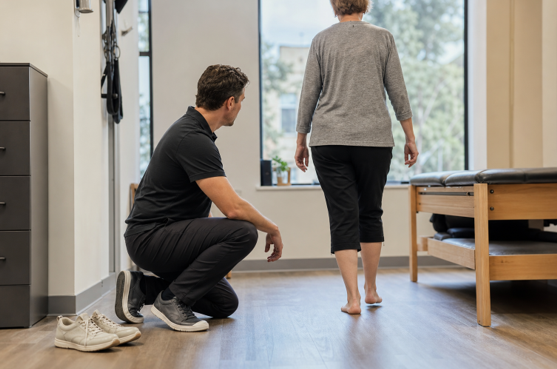
Foot pain, poor alignment, and gait changes can make everyday activities feel harder than they should be. Whether discomfort appears during work, exercise, errands, or standing at home, the priority is to understand why it is happening. CWG Foot Care helps patients restore healthy foot function through assessment-driven pedorthic care that considers the feet, footwear, movement patterns, and lower-limb mechanics together. Rather than assuming that every painful foot needs the same type of support, CWG Foot Care considers the individual factors that affect comfort and mobility. This may include foot structure, joint movement, pressure points, walking habits, work requirements, sport participation, and the shoes worn most often.
What Is the Best First Step to Restore Healthy Foot Function?
A professional assessment is often the most useful first step because pain does not always identify its own cause. Heel pain, for example, may be related to loading, footwear, activity changes, or a walking pattern. Pain in the knee, hip, or spine may also be influenced by lower-limb movement. CWG Foot Care evaluates whether foot mechanics could be contributing to the problem and recommends referral when another healthcare professional is needed. The goal is not simply to make a device. It is to identify practical steps that may improve comfort, support movement, and fit the patient’s real daily routine.
See also: How to Upgrade Your Outdoor Lifestyle for Comfortable Australian Road Trips
How Does CWG Foot Care Assess Foot Function?
CWG Foot Care uses clinical and biomechanical assessment as the foundation of care. This process helps clarify how the foot functions while standing and walking, as well as how footwear may affect support, pressure, and comfort.
What Does an Assessment Review Do?
- Foot shape, arch structure, alignment, and areas of tenderness.
- Movement through the foot and ankle joints.
- Weight distribution, pressure points, and walking mechanics.
- Current footwear, wear patterns, and room for an orthotic if needed.
- Activity level, occupational demands, exercise, and personal goals.
- Symptoms involving the foot, ankle, knee, hip, or spine.
This information helps CWG Foot Care decide whether custom orthotics, a prefabricated support, footwear modification, specialty products, practical guidance, or medical referral may be the most appropriate next step.
Which Conditions Can Affect Foot and Lower-Limb Function?
CWG Foot Care supports patients with a wide range of concerns. Plantar fasciitis can cause heel pain that makes first steps or prolonged standing difficult. Metatarsalgia can create discomfort beneath the ball of the foot. Bunions, hammer toes, and claw toes may increase the risk of rubbing, pressure, and footwear fit problems. Other concerns may include hallux rigidus, which limits movement at the big-toe joint, as well as shin splints, Achilles tendinitis, ankle pain, and select hip or spinal complaints. A foot assessment does not assume that the feet cause every problem. Instead, it examines whether foot structure, loading, or gait could be one contributing factor.
When Can Custom Orthotics Support Foot Function?
Custom orthotics may be considered when a person’s symptoms, foot structure, movement pattern, or activity needs call for individualized support. CWG Foot Care designs, manufactures, and fits custom foot orthotics after assessing the device’s intended function and the footwear it will be used with.
How Does the Orthotic Process Work?
- An assessment identifies symptoms, movement patterns, footwear needs, and treatment goals.
- The pedorthic plan determines the type of support, accommodation, or pressure management that may be useful.
- The orthotic is designed and manufactured for the individual and intended footwear.
- During fitting, comfort, shoe compatibility, and initial function are reviewed.
- Follow-up may be used to address changes in comfort, fit, or activity needs.
How Can Footwear Modification Improve Comfort and Movement?
Footwear is an important part of pedorthic care because even a well-designed orthotic needs a shoe that can accommodate it properly. A narrow toe box, shallow shoe, worn-out sole, or limited internal space can reduce comfort and interfere with support. CWG Foot Care may recommend supportive footwear or provide modification options for selected needs. These can include shoe lifts for appropriate leg-length differences, added room around bunions or toe deformities, pressure-relieving modifications, and specialty products suited to work, sport, or daily walking.
What Does Research Say About Custom Orthotics?
Orthotic care should be evidence-aware and condition-specific. Research summarized in evidence on custom-made foot orthoses shows that results can vary by diagnosis. Benefits reported for painful high arches, certain rheumatoid arthritis symptoms, juvenile idiopathic arthritis, and painful bunions do not mean that the same result will occur for every patient or every type of foot pain. For plantar heel pain, a clinical practice guideline supports using orthoses as part of a broader care plan rather than treating them as a universal cure. Fit, footwear, adherence, activity demands, and the underlying condition can all influence outcomes.
What Happens During a CWG Foot Care Appointment?
Patients can expect a structured conversation and assessment. First, they describe their symptoms, activities, and goals. CWG Foot Care then reviews relevant history, examines foot and lower-limb mechanics, and explains the findings in practical terms. Suitable options are discussed before a treatment plan is selected. Bringing the shoes worn most often can be especially helpful. Work shoes, walking shoes, athletic footwear, and casual shoes may reveal fit issues or wear patterns that affect comfort and help determine whether an orthotic or modification will work well.
How Does CWG Foot Care Compare Treatment Options?
- Clinical assessment: The starting point for understanding structure, symptoms, gait, and footwear needs.
- Custom orthotics: Considered for individualized support, pressure management, or functional goals.
- Prefabricated supports: May be appropriate for some general support needs.
- Footwear modifications: Useful when pressure, fit, alignment, or selected leg-length concerns affect movement.
- Medical referral: Recommended when symptoms require diagnosis, imaging, medication, rehabilitation, or another type of care.
Frequently Asked Questions About CWG Foot Care
Does every patient need custom orthotics?
No. CWG Foot Care determines whether custom orthotics are suitable after reviewing the patient’s condition, footwear, movement patterns, and goals.
Can CWG Foot Care help with bunions or hammer toes?
Yes. Assessment, footwear recommendations, modifications, and specialty products may help manage pressure and fit concerns associated with bunions, hammer toes, and claw toes.
Where is CWG Foot Care located?
CWG Foot Care is located at 1390 Clyde Avenue, Suite 103, in Nepean, Ontario, and serves patients throughout the Ottawa area.
Why Choose CWG Foot Care?
Healthy foot function starts with understanding the problem before choosing the solution. CWG Foot Care combines clinical assessment, biomechanical reasoning, custom orthotics, footwear modification, and practical guidance to help patients make informed decisions about foot comfort and movement. For people in Ottawa and Nepean dealing with pain, altered gait, or footwear-related discomfort, this individualized approach creates a clearer path forward.
Conclusion
Restoring healthy foot function starts with understanding what your feet need rather than choosing a product based on symptoms alone. A clinical and biomechanical assessment can help identify how foot structure, movement, footwear, and daily activities may be affecting comfort. From there, custom orthotics, footwear modifications, specialty products, or other recommendations can be considered when appropriate. Not every patient needs the same solution, and professional guidance can help prevent unnecessary treatment. For Ottawa and Nepean patients experiencing persistent foot pain, gait changes, or difficulty finding comfortable footwear, CWG Foot Care offers an individualized approach focused on practical function and mobility. By addressing concerns early and selecting support based on personal needs, patients can work toward more comfortable walking, standing, working, and everyday activities.