You may have heard the phrase “deep Curve of Spee” during an orthodontic visit and felt stuck on the name alone. That reaction makes sense. Most people do not walk into an appointment thinking about the shape of their bite from the side, even when exploring options like clear aligners in La Quinta, Ca. They notice the real-life version of the problem instead. Front teeth that seem to overlap too much. A bite that feels heavy in the front. Teeth that wear down faster than expected. Sometimes there is jaw strain, sometimes there is not, and sometimes the issue shows up most clearly in photos where the smile looks crowded or uneven.
A deep Curve of Spee means the lower teeth follow a curve that is too pronounced, which often goes along with a deep bite. Orthodontists correct it by leveling that curve so the upper and lower teeth meet in a healthier way. That can involve braces, clear aligners, elastics, bite turbos, careful tooth movement, and in some cases changes in the vertical position of certain teeth. The plan depends on your age, your tooth wear, your jaw pattern, and how severe the bite is.
Deep bite correction starts with the shape of your bite
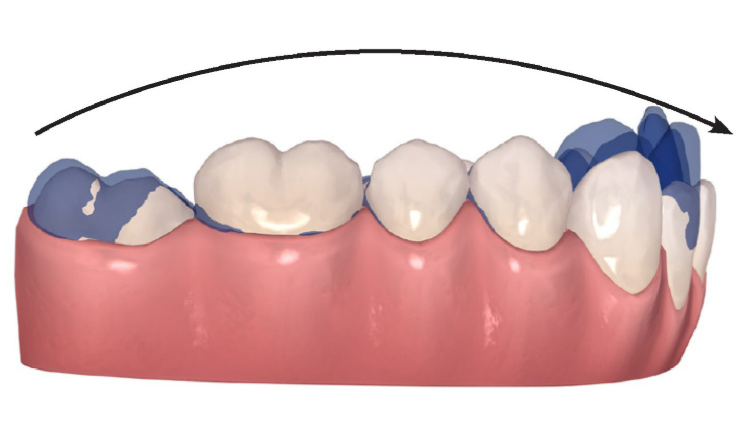
The Curve of Spee is the natural curve formed by the biting edges of your lower teeth when viewed from the side. A mild curve is normal. When that curve becomes too deep, the front teeth tend to overlap more than they should. That can create a chain reaction. The lower front teeth may push too far behind the upper front teeth. The back teeth may not share biting forces well. The smile can look shorter because so much of the lower teeth disappear behind the upper teeth.
Some people live with this for years and only learn about it after a chipped tooth, gum irritation, or ongoing wear. According to MedlinePlus information on malocclusion, bite problems can affect chewing, speech, oral hygiene, and tooth wear. A deep curve does not always cause pain, which is part of why it gets ignored. No pain does not mean no damage.
Orthodontists use controlled force to level the curve of Spee
How orthodontists correct a deep Curve of Spee depends on what is causing it. In many cases, the lower front teeth have overerupted, the back teeth have not erupted enough, or both problems are present. Orthodontists study photos, X rays, scans, and how your teeth touch when you bite. Then they choose the safest way to flatten that exaggerated curve.
With braces, the wire can be shaped to help intrude lower front teeth, meaning move them slightly upward into bone, while also coordinating the rest of the arch. Brackets allow precise control, which matters because leveling the curve too quickly or in the wrong pattern can leave the bite unstable.
With clear aligners, the plan often includes programmed intrusion of front teeth, posterior extrusion in selected cases, and attachments that help the trays grip teeth better. Deep bite cases can be treated successfully with aligners, but the mechanics have to be intentional. The American Association of Orthodontists discussion of deep bite mechanics with clear aligners explains how staging, attachments, and force control affect results.
You might also hear about bite turbos or bite ramps. These are small buildups placed on certain teeth to open the bite temporarily. They stop the front teeth from locking together, which gives the orthodontist room to move teeth into better positions. They can feel awkward at first, especially when eating, but they often solve a problem that would otherwise slow treatment.
Different deep bite treatment methods solve different parts of the problem
No single tool fixes every deep bite. A teen with growing jaws, mild crowding, and healthy enamel has different needs from an adult with worn front teeth and years of clenching. An adult may need a plan that protects already shortened teeth. A younger patient may benefit from growth-friendly timing and simpler mechanics.
| Treatment method | How it helps level the curve | Best fit | Main limitation |
| Braces | Precise control of intrusion, alignment, and arch leveling | Moderate to severe deep bite, complex tooth movement | More visible, harder to clean around |
| Clear aligners | Planned intrusion and bite opening with attachments or ramps | Mild to moderate cases, appearance-conscious adults | Needs strong daily wear compliance |
| Bite turbos or ramps | Creates space so front teeth can unlock and move | Patients whose bite blocks correction | Temporary speech and chewing adjustment |
| Elastics | Helps coordinate arches and refine tooth contact | Cases needing extra bite settling | Results depend on consistent use |
Deep bite correction is not just about making teeth look straighter. It is about reducing destructive contact and creating a bite that can hold up over time. That matters if you already grind your teeth, if your front teeth are thinning, or if dental work keeps breaking in the same area.
See also: How To Choose A Work Truck That Fits A Small Business in Tulsa, Oklahoma
Orthodontic treatment works best when the diagnosis is specific
An online photo or a quick mirror check cannot tell you whether the problem is mostly dental, skeletal, or both. That distinction matters. If the issue comes mainly from tooth position, an orthodontist can often correct it with tooth movement alone. If jaw relationships play a larger role, treatment planning becomes more careful and sometimes broader. That does not always mean surgery. It means the mechanics need to match the cause.
This is where a qualified orthodontist adds value beyond general straightening. The goal is not to flatten the lower arch at any cost. The goal is to level the curve enough to improve function, protect teeth, and keep the result stable.
Three steps you can take right away
1. Track the signs you already notice. Pay attention to front tooth wear, chipping, crowding, gum irritation behind upper front teeth, or a bite that feels too heavy in front. Bring photos if you have older pictures that show changes over time.
2. Ask what is driving your deep bite. During a consultation, ask whether your lower front teeth are overerupted, whether your back teeth need vertical support, and whether aligners or braces would control the movement better in your case. That question gets you past the label and into the actual treatment logic.
3. Ask how retention will protect the result. A corrected bite still needs retention. Ask what type of retainer you will wear, how often, and how the office checks that the bite stays level after treatment.
Leveling the curve of Spee can protect your smile for the long term
If you have been told you have a deep curve or a deep bite, you are not overreacting by looking into it. Small bite problems can become expensive tooth problems when they keep grinding away year after year. The good news is that correcting a deep Curve of Spee is a routine part of modern orthodontic care, and the right plan can improve comfort, function, and the life of your teeth.
The next step is simple. Schedule an orthodontic evaluation and ask for a clear explanation of what is causing your bite to sit so deep, what method will level it, and what kind of result you can expect to keep.